
Paperless accounts payable can feel like a big leap if you’ve always relied on paper, but it’s one of those changes you’ll wonder how you ever managed without.
For companies leveraging accounts payable automation, data shows they can reduce operating time spent on accounts payable by roughly 70%!
That’s hours saved in your week and more time to focus on running your business instead of chasing invoices.
In this article, we’re going to walk through how it works, what makes it so powerful, and how you can implement it without the overwhelm.
The Pain Points of Paper-Based AP Systems
We meet business owners all the time who are overwhelmed by the sheer volume of vendor bills, approval delays, and a growing stack of documents they swear they’ll get to next week.
Paper-based accounts payable (AP) systems weren’t designed for today’s fast-paced, digital-first business environment. They were built for a slower time when everything happened in person and in triplicate. Here’s what that looks like in real life:
Delayed Payments and Approvals
Paper invoices get passed from desk to desk (or worse, lost in a pile), slowing down the entire approval process. That delay frustrates your vendors and can affect your cash flow, late fees, and even your reputation.
Lost or Misplaced Invoices
It only takes one missing invoice to throw off your entire system. Plus, hunting down documents eats up valuable time you could be spending on your business.
Manual Data Entry Errors
When you’re typing in invoice data by hand, mistakes are inevitable. Wrong amounts, missed due dates, duplicate payments are all part of human error and if your team is already juggling a million things, those errors slip through unnoticed until it’s too late.
Lack of Visibility Into Cash Flow
With everything scattered across file cabinets, inboxes, and spreadsheets, it’s nearly impossible to get a real-time picture of your payables. That makes it tough to plan, budget, or make informed financial decisions.
Relying on Outdated Systems in a Digital World
Still faxing invoices or writing paper checks? It’s time to modernize. Today’s businesses operate online, so your financial systems should, too. Staying stuck in the past means falling behind competitors who are already moving faster and smarter.
What Is a Paperless Accounts Payable System?
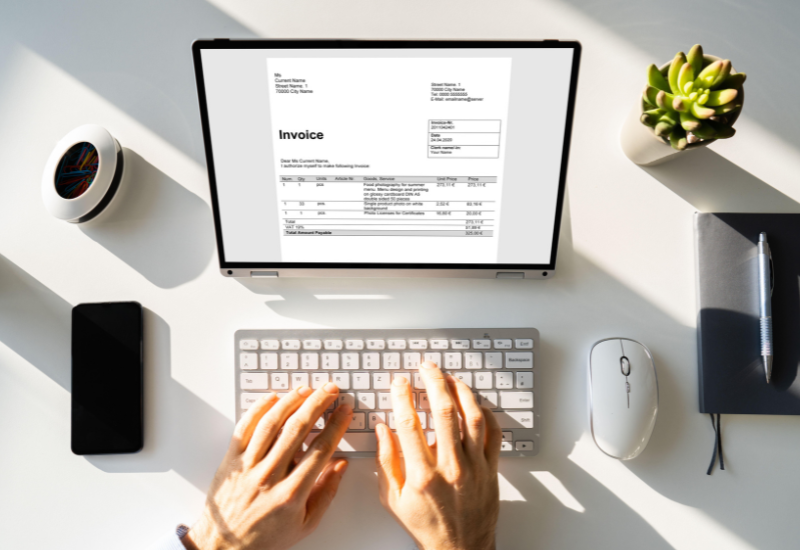
A paperless accounts payable system is exactly what it sounds like: a digital process that eliminates the need for physical invoices, checks, and approval paperwork. More than that, it’s a smarter, faster way to manage how your business pays its bills.
It doesn’t mean you need to overhaul everything overnight. In fact, most businesses we work with start small, digitizing a few key workflows, and scale up as they go. But the results are immediate: fewer headaches, faster payments, and total visibility into your numbers.
Here’s how it works in practice:
The Tools That Power Paperless AP
- QuickBooks Online – Your central hub for tracking all financials, syncing invoices, and generating reports.
- Melio – A bill payment app that lets you schedule payments, approve bills, and send ACH transfers with a couple of clicks.
- OCR (Optical Character Recognition) Tech – Converts scanned or photographed invoices into digital, searchable data.
- Cloud Storage – Keeps every invoice, receipt, and payment record accessible anytime, from anywhere.
Related Reading: 10 QuickBooks Online Features You’re Probably Not Using
The Typical Workflow
- Receive Bills Digitally
Vendors send invoices by email, or you upload scans. OCR software extracts key details like amounts, due dates, and vendor names, with no manual typing required. - Code and Route for Approval
The system automatically categorizes expenses (rent, utilities, repairs, etc.) and routes them to the right person for approval. - Pay via ACH
Once approved, payments are scheduled or made instantly through secure ACH transfers, meaning no more printing checks or mailing envelopes. - Sync With Your Accounting Software
Every step, from invoice receipt to final payment, is automatically synced with QuickBooks. That means no duplicate entries, no messy reconciliations, and no surprises at month-end.
Related Reading: Everything You Need to Know About Using Quickbooks Payments

Strategic Benefits of Paperless Accounts Payable
When people think about going paperless with their accounts payable system, a few benefits immediately come to mind, like faster bill payments, fewer filing cabinets, and saying goodbye to lost invoices.
We’ve found that the biggest transformations often come from the things you didn’t even realize were causing problems until they’re suddenly… gone.
Here’s a closer look at both the obvious and the surprisingly impactful benefits of automating your AP:
The Benefits of Paperless Accounts Payable You Expect:
- Faster Approvals & Payments: With digital routing, you’re no longer waiting on a signature or chasing down someone who’s out of office. Everything moves in real time.
- Fewer Errors: Automation means no more mistyped amounts, duplicate payments, or lost paperwork. Everything’s logged, tracked, and backed up.
- Remote Access: Need to approve a vendor payment while you’re traveling? With cloud tools like QuickBooks Online and Melio, you’re always one login away from your financials.
- Better Organization: All your invoices, bills, and receipts are stored neatly online, searchable by vendor, date, or category.
The Benefits of Paperless Accounts Payable You Didn’t Expect:
- Reduced Mental Load for Owners: Everything is visible and organized in one dashboard. You stop wondering about your cash flow and start knowing.
- Fewer “Fire Drills”: No more last-minute rushes to cut checks, get approvals, or track down missing invoices. A paperless system creates structure—and structure prevents chaos.
- Stronger Vendor Relationships: Paying vendors on time (or early) builds trust. When your process is consistent and reliable, vendors are more responsive, more flexible, and more likely to prioritize you.
- Audit-Readiness on Day One: Everything’s tracked. Every invoice, every approval, every payment.
- A Foundation for Future Growth: Once your AP is automated, you’ve built a financial backbone that can scale with you.
Related Reading: How to Run an A/R Aging Summary in QuickBooks

Turning a Paper-Based Business Into a Digital-First Operation
To see how impactful paperless accounts payable systems can be, let’s look at a real client situation we encountered, not unlike many small businesses we work with.
Two sisters inherited a mixed-use commercial property in Stamford, CT, after the passing of their father. They found themselves suddenly responsible for managing tenants, handling rent collection, and overseeing operating expenses, with little to no business experience between them.
To make matters more complicated, the existing accountant relied solely on paper. No cloud access, no clear records, and no financial transparency. Trust had broken down, and they were flying blind.
That’s where MISSION Accounting stepped in. We started by implementing QuickBooks Online Plus, giving the owners a centralized, cloud-based financial hub they could access anytime. We integrated Melio to create a completely paperless accounts payable workflow.
On the AP side, we built a streamlined system where bills could be received electronically, categorized, routed for approval, and paid securely via ACH, with all activity syncing back to QuickBooks automatically.
What started as a tangled paper trail quickly became a clean, functional, and scalable system.
More importantly, it gave the owners something they hadn’t had before: control, clarity, and confidence in their financial picture.
Related Reading: QuickBooks Payments vs. Stripe, Square, and PayPal
The Role of Professional Guidance in Accounts Payable Automation
Setting up a paperless accounts payable system isn’t as simple as flipping a switch.
When you’re dealing with financial data, there’s no room for error. If your chart of accounts is misaligned, or your vendor workflows aren’t structured properly, it can lead to confusion, incorrect reporting, or worse, compliance issues down the line. Setting things up right from the start ensures your systems are reliable, efficient, and audit-ready.
Avoiding Compliance Gaps
With tax rules, reporting requirements, and payment regulations constantly evolving, it’s easy to miss something critical. Accounting professionals can help ensure your AP system meets industry and legal standards, reducing the risk of penalties or financial missteps.
Tailored Solutions for Your Business
No two businesses are exactly alike. A nonprofit’s needs aren’t the same as a retail shop’s. A property management company needs different workflows than a design agency. That’s why off-the-shelf solutions often fall short. Working with an expert allows you to build a system that fits your size, structure, and unique pain points without overcomplicating it.

How MISSION Accounting Can Help
At MISSION Accounting, we help clients design and implement AP automation systems that work for them and not the other way around.
From selecting the right software stack to setting up automated approvals and training your team, we’re with you every step of the way.
Ready to take the stress out of accounts payable?
Contact MISSION Accounting today for a free consultation and let’s talk about how we can help you go paperless once and for all!
